Sub-Total: $0.00
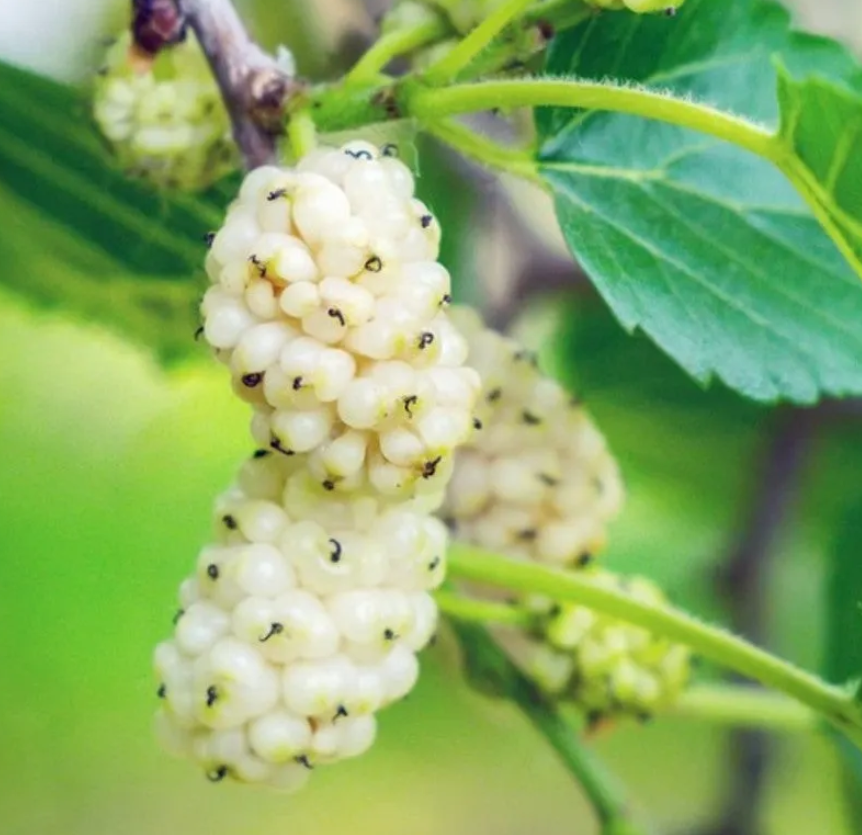
Morus Alba (White Mulberry)
$30.00
Description
Trees are potted in 2-3G pots and are currently 4-6ft tall.
The White Mulberry (Morus alba) is a fast growing tree that has become a global staple for its ecological and medicinal value. While originally cultivated to support the silk industry, it is now prized for its sweet, honey-like fruit and therapeutic leaves.
White mulberry trees are very fast growers that are not particular about soil type. They will grow in clay, loam, or sandy soil, whether it be alkaline or acidic. They prefer full sun but can grow in part shade.
Key Characteristics
- The Tree: A small to medium deciduous tree, typically growing 30–40 feet tall.
- The Fruit: Despite the name, ripe fruit can range from white and pink to deep purple. They are intensely sweet but often described as more “honey-like” compared to the tartness of black mulberries.
- The Leaves: Recognizable by their glossy tops and varied shapes, often having irregular lobes.
- Blood Sugar Management: Compounds in the leaves, particularly 1-deoxynojirimycin (DNJ), may slow the breakdown of sugars in the gut, helping to stabilize blood sugar levels after meals.
- Nutritional Value: The fruit is a rich source of Vitamin C, Iron, and Fiber and are thought to improve immue system
- Culinary: Fresh berries are highly perishable, so they are often enjoyed dried as a snack (similar to raisins) or used in jams, wines, and syrups
Cold-hardy.
Grown from seed. White mulberry trees can be dioecious (either male or female) or occasionally monoecious (having both male and female flowers on the same tree). Only female trees produce fruit.
Uncertainty: You will not know if the tree is male or female until it flowers, which can take several years. If you want fruit, you generally need at least one female and one male tree nearby for pollination, although some female trees can produce fruit without pollination. To get fruit, it is recommended to plant a few trees.
Zone: 4-7